An Introduction to Astrology
"The placement of the celestial bodies in the heavens at any given moment in time reflects the nature of that moment, including the nature of an individual born in that moment."
Astrology is the study of the positions and aspects of celestial bodies in the belief that they have an influence on the course of natural earthly occurrences and human affairs. Astrology in one form or another was around even before mankind's earliest written records began. There are many traditions of astrology because each part of the world had it's own form and method of looking at the stars for information and assistance.
Astrology can be used as a form of divination by anyone who is willing to learn the basics and apply them.
Many modern astrologers define astrology as an art form or a symbolic language.
Some individuals in the mainstream scientific community still consider astrology a pseudoscience or even superstition.
But Astrology has played a role in the shaping of culture, early astronomy, and other disciplines throughout history.
As early as about 5000 B.C.E (before Christ/before common era), the Sun, Moon, and Stars were an important focus of many early civilizations. Most systems of astrology share some similar features.
Before the modern era, the science of Astronomy was often indistinguishable from Astrology. Both involved the observation and study of the motions of celestial objects in order to make predictions.
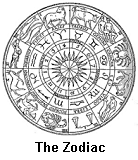
When most people think of Astrology they think of the word zodiac. The Zodiac is actually the belt or band of constellations through which the Sun, Moon, and planets transit across the sky. Early astrological observation of the most important constellations developed over time into the twelve signs of the zodiac now know as: Aries, Taurus, Gemini, Cancer, Leo, Virgo, Libra, Scorpio, Sagittarius, Capricorn, Aquarius, and Pisces.
Each calendar year is divided into twelve months of around thirty days each. Each thirty day period is associated with a section of the zodiac, and with one of the twelve zodiac signs. The Sun (which can actually be considered a planet in astrology) takes about thirty days to travel through each of the twelve astrological signs.
Your Sun Sign is derived from the section of the Zodiac (the sign) where the Sun was placed at the time of your birth. It's easy to find of course because all you need to know is your month and day of birth.
Astrological Self Exploration
There is more to Astrology then just your Sun Sign. Each astrological/zodiac sign has various qualities, characteristics, and traits associated with it. Your sun sign helps to shape your personality. But the moon and all the other planetary bodies also have a unique quality and "energy" of their own. Your personality is a unique combination of influences from not only the Sun, but from the Moon, and all of the Planets in the solar system. The positions of each of these celestial bodies at the time and place of your birth can give you a more detailed and accurate picture of who you are.
A Horoscope is an astrological forecast based on a chart or diagram that represents the positions of the Sun, Moon, Planets, the astrological aspects, and angles at the time of an event, such as the moment of a person's birth. The 12 Houses of the zodiac are represented in the chart as different spheres of life, physical surroundings and life experiences. The placement of a planet in a house (and also the zodiac sign that the house represents) will determine the area of life in which it acts, and the goals and activities on which its drive or impulse will be focused.
By looking at the positions and aspects of the celestial bodies at the moment of birth, one can create a Natal Chart. By studying and interpreting the Birth Chart one can become aware of the qualities and traits that make up their individual personality and discover how the celestial bodies have influenced past events, and how they are shaping current experiences.
If applied accurately, Astrology can be used for divinatory purposes by studying and interpreting the patterns, aspects and phases of current planetary activity, in order to gain a better understanding of how their energies can influence the nature of people and events, and to determine the probability of future events and experiences.
The horoscopes that you see in newspapers and magazines can be vague and not entirely accurate because they are being based on just the individuals Sun Sign. For example, those born when the sun was in the sector of the zodiac known as "Pisces" will all share similar general characteristics, and some assumptions can be made about them, but knowing the exact time and place of ones birth, and the positions of the planets, and other astrological details would give the individual a unique snapshot of there inner nature, positive and negative personality traits, influences, talents, challanges, and probable futures.
"Events in the heavens are mirrored by those on Earth, As above, so below."Astrology is a wonderful ancient tool that can be used for self-exploration, personal guidance and spiritual wisdom.
The Shaping of Astrology
The History and early origins of astrology date back thousands of years ago, but the history of "modern astrology" can be traced back to the 2nd millennium BC during the time of the ancient Babylonians. Early observation of the heavens led to the assembling of a system of celestial omens that slowly gave rise to the astrological principles and methods that later developed in Asia, Europe, and the Middle East, and eventually spread to other countries, like India, China, Greece. There are many traditions, systems, and methods of astrology, but most share common similarities.
Egypt was one of the most important places in the development of astrology. After the occupation by Alexander the Great in 332BC, Egypt came under Greek rule and influence. Babylonian astrology was mixed with the Egyptian tradition of Decanic astrology to create Horoscopic astrology.
Horoscopic Astrology was the first system to use the Ascendant, and the twelve celestial houses which are derived from it.
In ancient Hellenistic astrology (a tradition of horoscopic astrology that was developed and practiced in Hellenistic Egypt and the Mediterranean) the Ascendant marked the first celestial house of a horoscope. Some of the astrological signs of the zodiac may have originated in Egypt, although most originated in Babylon.Star charts have been found in Egypt that go back as far as 4,200 BC.
The calculation of the horoscope or astrological chart is central to horoscopic astrology.
A horoscope is an astrological chart that visually represents the positions and aspects of celestial bodies (sun, moon, and planets) at the time of an event, The astrological chart is analyzed and interpreted, revealing the nature of an individual event, and often determining future events.
A horoscope is divided into twelve different celestial Houses. which govern different areas of life. The Ascendant, or Rising Sign, is the zodiacal sign and degree that was ascending on the eastern horizon at the specific time and location of an event. Any system of astrology that does not utilize the ascendant does not fall under the category of horoscopic astrology.The tradition of Horoscopic Astrology is the most commonly used today, it's four main branches being Natal astrology, Mundane astrology, Electional astrology, Horary astrology.
Electional astrology (also known as Katarchic astrology) concerns itself with finding the best time to do a particular activity, taking into account the individual person, and the place where the action will be performed, in order to get the best results possible. It can determine the ideal time to initiate an action, such as buying a house, starting a business, getting married, buying a car, beginning a journey/travel, and so on. A Farmers Almanac uses such concepts.
Mundane astrology (or world astrology) is the application of astrology to world affairs and events, government and politics, weather, natural and man-made disasters, and the rise and fall of empires or religions. This includes the Astrological Ages, such as the Age of Aquarius, Age of Pisces and so on. Each age is about 2,150 years in length. These massive ages correspond to major historical events and current developments in the world.
It's purposes are to look back and explain history and also to predict the future (sometimes for the prevention of danger or disasters)..
Horary astrology is used in an attempt to answer a question by constructing a horoscope for the exact time and place at which either the question was asked by the querent, or received by the astrologer. The answer might be a simple yes or no, but is generally more complex, offering insights into the motives of the questioner, the motives of others involved in the matter, and the options available to him./her
Natal astrology (also know as genethliacal astrology) is based upon the concept that each individual's personality, life experiences, or path in life can be determined by constructing a natal chart for the exact date, time, and location of a person's birth. This is the most common branch of horoscopic astrology seen in the western world today.
The focus on the natal chart of the individual is the most significant contribution and shift of emphasis that was made during the Hellenistic tradition of astrology that originated in Egypt, and it quickly spread into Europe, the Middle East and India.
A Natal chart shows the positions and aspects of the sun, moon, and planets at the exact time and location of an individual's birth, for the purpose of gaining information about the individual and about future events. .
Traditions of Astrology and the Zodiac Systems
The main traditions used by modern astrologers are: Vedic astrology, Western astrology, and Chinese astrology.
Vedic and Western astrology share a common ancestry as horoscopic systems of astrology, in that both traditions focus on the casting of an astrological chart or horoscope, a representation of the position of the Sun, Moon, and planets at the moment of the event.
Chinese astrology is quite different from other systems of astrology in that the twelve signs of the zodiac do not divide the sky, but rather the celestial equator. Each sign of the zodiac governs a different year, and combines with a system based on the five elements of Chinese cosmology. Each zodiac sign is represented by an animal which governs specific years of time, instead of months.
Throughout its long history, astrology has come to prominence in many regions and undergone developments and change.
Although not commonly used, many astrologers still have interest in several historically significant traditions of astrology which include: Arab and Persian astrology (Medieval, near East), Babylonian astrology (Ancient, near East), Egyptian astrology, Hellenistic astrology (Classical antiquity), and Mayan astrology. Many mystic or esoteric traditions have links to astrology. Some of these include: Alchemy, Chiromancy, The Kabbalah (Kabbalistic astrology), Medical astrology, Numerology, Rosicrucian or "Rose Cross", and The Tarot
The majority of Western astrologers base their work on the Tropical Zodiac which divides the sky into twelve equal segments of 30 degrees each, beginning with the first point (Aries) where the line of the Earth's celestial equator and the ecliptic (the Sun's path through the sky) meet at the northern hemisphere spring equinox. Due to the precession of the equinoxes the zodiacal signs in this system bear no relation to the constellations of the same name, but instead stay aligned to the months and seasons.
Practitioners of the Vedic astrological tradition and a minority of Western astrologers use the The Sidereal Zodiac. This zodiac uses the same evenly divided ecliptic but approximately stays aligned to the positions of the observable constellations with the same name as the zodiacal signs. The sidereal zodiac differs from the tropical zodiac by an offset called the ayanamsa, which steadily increases as the equinoxes drift further.
In the past, astrologers often relied on close observation of celestial objects and the charting of their movements. Modern astrologers use data provided by astronomers which are transformed to a set of astrological tables called ephemerides, showing the changing zodiacal positions of the heavenly bodies through time.
The workings of Astrology
In today's modern society people from all walks of use astrology or consult astrologers for personal guidance. Personal Horoscopes can give someone insight into many areas of life, such as, love and romance, business and finance, career, home and family life, and so on.
Many well known leaders and rules throughout history have consulted astrologers for guidance, and many well known historical figures studied and contributed to astrology over the years.
Astrology works according to the laws of nature, and also upon the synchronicity principle. As Above So Below. The patterns found in the Macrocosm (the universe) can be observed in the Microcosm (the world within us).
Celestial bodies may have influence over terrestrial matter through various forces and mechanisms such as electromagnetism. Through careful observation and study of their positions and movements, and positive and negative aspects, celestial bodies can be used as signs or portents of events to come.
In the words of the famous Psychologist Carl G. Jung: "Our modern science begins with astronomy. Instead of saying that man was led by psychological motives, they formerly said he was led by his stars. ... The puzzling thing is that there is really a curious coincidence between astrological and psychological facts, so that one can isolate time from the characteristics of an individual, and also, one can deduce characteristics from a certain time. Therefore we have to conclude that what we call psychological motives are in a way identical with star positions. Since we cannot demonstrate this, we must form a peculiar hypothesis. This hypothesis says that the dynamics of our psyche is not just identical with the position of the stars, nor has it to do with vibrations - that is an illegitimate hypothesis. It is better to assume that "i" is a phenomenon of time. ... The stars are simply used by man to serve as indicators of time..."
Quotes on Astrology
"Millionaires don't have astrologers, billionaires do." - J.P. Morgan"Courteous Reader, Astrology is one of the most ancient Sciences, held in high esteem of old, by the Wise and the Great. Formerly, no Prince would make War or Peace, nor any General fight in Battle, in short, no important affair was undertaken without first consulting an Astrologer." - Benjamin Franklin
"A physician without a knowledge of astrology has no right to call himself a physician ... There is one common flow, one common breathing, all things are in sympathy." - Hippocrates
"The celestial bodies are the cause of all that takes place in the sublunar world." - Thomas Aquinas
"A touchstone to determine the actual worth of an "intellectual", find out how he feels about astrology. " - Robert Heinlein
"The cosmos is a vast living body, of which we are still parts. The sun is a great heart whose tremors run through our smallest veins. The moon is a great nerve-center from which we quiver forever. Who knows the power that Saturn has over us, or Venus? But it is a vital power, rippling exquisitely through us all the time." - D. H. Lawrence
Introduction To Astrology
The History of Astrology
The Basics of Astrology
The Sun Sign
The Moon Sign
The Ascendent (Rising Sign)
The Zodiac
The Natal Chart
The Planets
The Houses
Astrology Calculators
Free Horoscopes
The Age of Aquarius
Astrology Articles
Astrology Videos
Astrology Humor
Astrology Resources
Chinese Astrology
What's Your Sign?
Back To: Astrology
Top of Page
Divination and E.S.P
Numerology
Prophecies and Predictions
Magick and Intent
The 11:11 Phenomenon
Cosmology